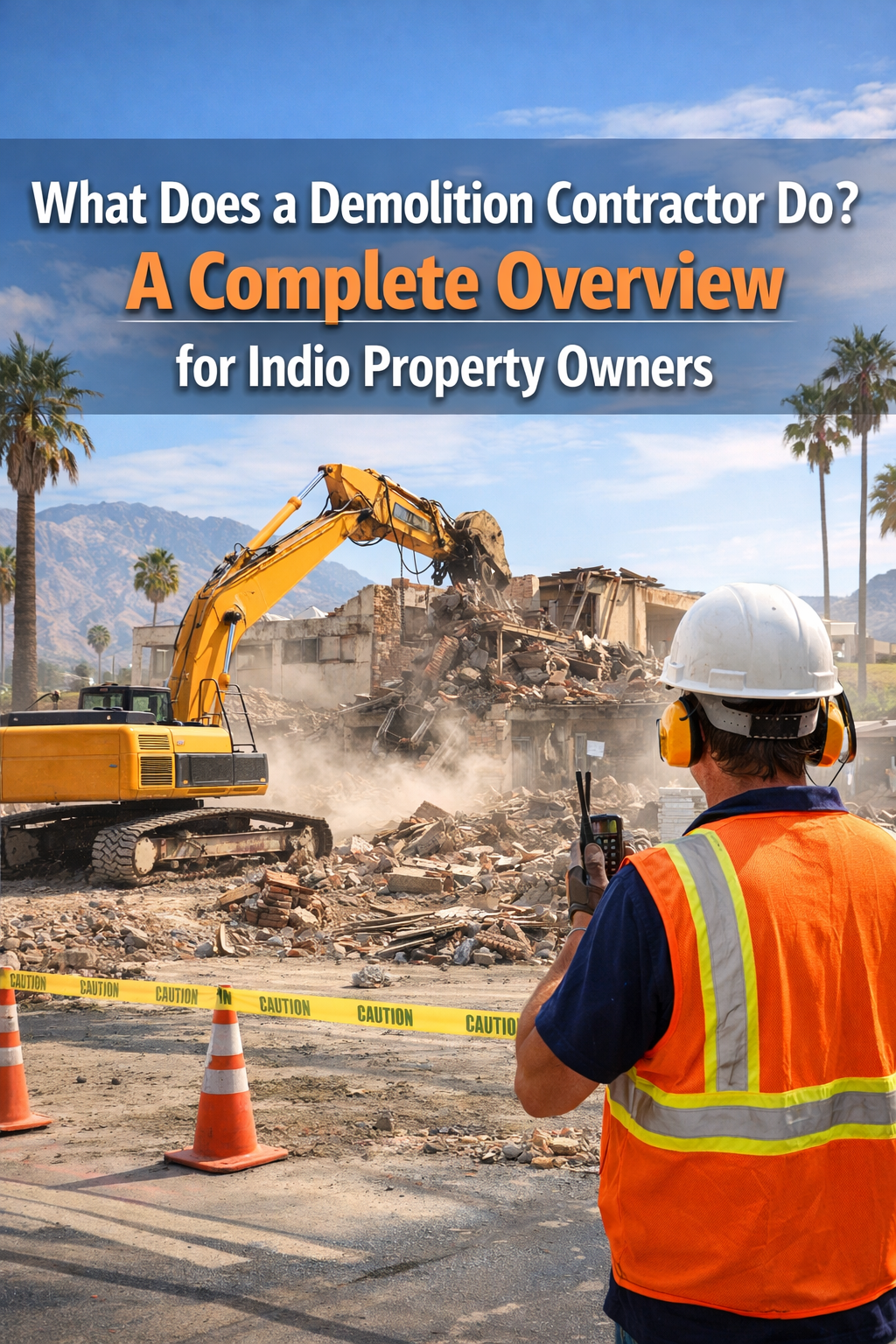
When people think about construction, they often picture things being built up walls rising, roofs going on, finishes being applied. But before any of that can happen, something else often has to come down. Demolition is the science and practice of safely dismantling structures, and it is far more methodical and regulated than popular perception suggests. In Indio, California a growing city in the Coachella Valley demolition services are an integral part of urban development, renovation, and disaster recovery.
The Scope of Demolition Work
Demolition Contractor Indigo handle a remarkably broad range of tasks. At the residential level, this might mean tearing down an old garage, removing a pool, or clearing a property for new construction. At the commercial level, it can involve gutting the interior of a retail space for renovation, removing outdated industrial equipment, or completely demolishing a building to make way for a modern facility.
Interior demolition sometimes called soft demolition focuses on removing walls, flooring, ceilings, fixtures, and other interior components without affecting the building’s structural shell. This type of work is common during major renovations. Full structural demolition, on the other hand, involves bringing down an entire building, managing the debris, and preparing the site for new development.
Demolition Methods Used by Professional Contractors
Modern demolition is not a single method but a collection of techniques matched to the structure and project requirements. Mechanical demolition uses heavy equipment such as excavators, bulldozers, and hydraulic rams to break apart and remove structures. This is the most common method for residential and small commercial projects.
High-reach demolition employs extended-arm excavators to safely bring down taller structures from the top down. Selective deconstruction, by contrast, is a more careful approach in which materials are systematically removed and sorted for reuse or recycling valuable for historically significant structures or sustainability-focused projects. For very large industrial buildings, controlled implosion using explosives placed at precise structural points can bring a building down safely within its own footprint, though this method requires extensive engineering and permitting.
Safety and Regulation in Demolition
Demolition is one of the most safety-regulated activities in the construction industry, and for good reason. Falling debris, structural collapse, dust, noise, and the presence of hazardous materials all present serious risks if not properly managed. In California, demolition contractors must hold appropriate licenses a C-21 Building Moving and Demolition Contractor Indigo License and comply with state and local building codes.
Before any demolition begins, a thorough survey is conducted to identify hazardous materials such as asbestos, lead paint, or mold. In older buildings, these materials must be properly abated removed and disposed of according to EPA and Cal/OSHA regulations before structural work can begin. This pre-demolition survey is not optional; it is a legal requirement in California and a fundamental part of responsible contractor practice.
Environmental Responsibility in Demolition
The demolition industry has evolved significantly in its approach to environmental stewardship. Rather than simply hauling everything to a landfill, responsible contractors sort and divert materials for recycling whenever possible. Concrete can be crushed and reused as aggregate. Metals are recovered and recycled. Wood framing, fixtures, and architectural elements can sometimes be salvaged for reuse.
In Indio and the broader Coachella Valley, where construction activity is ongoing and the desert environment places special importance on responsible waste management, this approach to sustainable demolition is increasingly valued by property owners and project developers alike.
Demolition in the Context of Indio’s Development
Indio is a dynamic city the most populous in the Coachella Valley known for its vibrant cultural events, agricultural roots, and a fast-growing residential and commercial base. As the city evolves, older structures are often replaced by modern facilities, and existing properties are repurposed or expanded. Demolition is a foundational step in that transformation.
From removing fire-damaged structures to clearing sites for new residential developments, demolition contractors in Indio operate at the intersection of urban renewal and property recovery. Their work is technical, regulated, and essential and understanding what they do helps property owners plan their projects more effectively.